
Milk-Bone is one of those brands that has proven itself so deeply into American dog ownership that the name alone conjures a very specific image — a happy dog, tail wagging, waiting patiently for a treat.
Whether you are a first-time dog parent trying to figure out if these treats are right for your pup, a seasoned owner who wants to understand what is actually in the bag, or someone weighing Milk-Bone Soft and Chewy Dog Treats against cleaner-label alternatives, you will find clear, data-backed answers here. No vague reassurances, no brand-sponsored gloss — just the facts, straight.
Milk-Bone has been a staple of American dog life since 1908, meaning the brand brings over 115 years of manufacturing experience to the table. The Soft & Chewy line, however, is a more modern evolution — designed to compete in the booming soft treat segment that senior dogs, picky eaters, and training-focused owners increasingly prefer.
What Are Milk-Bone Soft & Chewy Dog Treats?
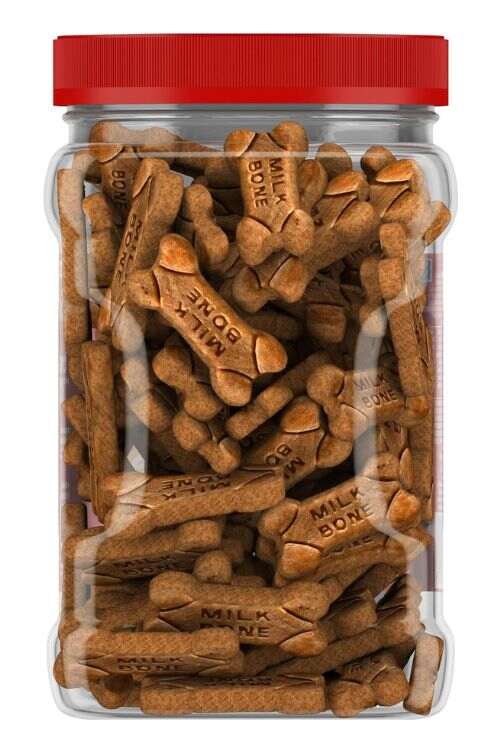
Unlike the brand’s classic hard biscuits, the Soft & Chewy line delivers a semi-moist, pliable texture that many dogs find irresistible. They are bone-shaped, approximately 2 inches long per piece, and come in a resealable canister or pouch format to maintain freshness.
The treats are marketed as suitable for dogs of all breed sizes and are positioned as an everyday snack, a training reward, or a special moment treat.
Key Definitions:
- Semi-moist treat: A treat with a moisture content typically between 15–35%, giving it a soft, chewy texture that neither crumbles like a biscuit nor falls apart like wet food. Milk-Bone Soft & Chewy sits at a maximum moisture of 22%.
- Fortified treat: A treat that has had vitamins and/or minerals added beyond what naturally occurs in the base ingredients. Milk-Bone Soft & Chewy are fortified with 12 vitamins and minerals.
- Real meat as #1 ingredient: The ingredient listed first by weight before processing. In the Chicken Recipe, chicken is the primary ingredient.
Available Flavors and Varieties
Milk-Bone has steadily expanded the Soft & Chewy lineup beyond the original two flavors. Here is a current overview of the main varieties available:
| Flavor / Variety | Key Protein | Notable Ingredients |
|---|---|---|
| Chicken Recipe | Chicken (+ Chicken Breast) | Smoke flavor, Soy Grits |
| Beef & Filet Mignon | Beef + Chicken | Malt Extract, Smoke flavor |
| Real Bacon | Chicken + Bacon | Added color |
| Soft & Chewy Minis (Chicken) | Chicken | Garlic Powder, Bone Phosphate |
| Wholesome Chicken Recipe* | Chicken | Oats, Sweet Potato, Dried Apple |
Package Sizes Available:
- 5.6 oz bag — approximately 10–15 treats (great for trying a new flavor)
- 18 oz canister — Minis variety (approximately 4.45 calories per piece)
- 25 oz canister — approximately 80 treats (best value for regular buyers)
- 25 oz bundle of 2 — sold on Chewy and Amazon for multi-dog households
Nutritional Profile:
Here is the guaranteed analysis for the standard Soft & Chewy Chicken Recipe, pulled directly from official product listings:
| Nutrient | Amount |
|---|---|
| Crude Protein (Min) | 18.0% |
| Crude Fat (Min) | 8.0% |
| Crude Fiber (Max) | 2.5% |
| Moisture (Max) | 22.0% |
| Calcium (Min) | 0.4% |
| Phosphorus (Min) | 0.4% |
| Magnesium (Min) | 0.05% |
| Iron (Min) | 31.2 mg/kg |
| Zinc (Min) | 62.4 mg/kg |
| Calories per treat | ~24 kcal |
Nutrient Highlights:
- The 18% protein minimum is respectable for a treat, though the protein comes from a combination of chicken and soy grits — not chicken alone.
- At 24 calories per full-sized treat, this is a moderate-calorie snack. For a 20-lb dog whose daily caloric need might be around 500–600 kcal, a single treat represents roughly 4–5% of their daily intake.
- The Minis version drops to just 4.45 calories per piece, making it far more practical for training sessions where multiple rewards are given.
- The 12-vitamin and mineral fortification includes Vitamins A, B12, D3, E, niacin, riboflavin, folic acid, biotin, and pantothenic acid alongside key minerals — providing genuine supplemental nutritional value beyond empty calories.
Milk Bone Soft and Chewy Dog Treats Review
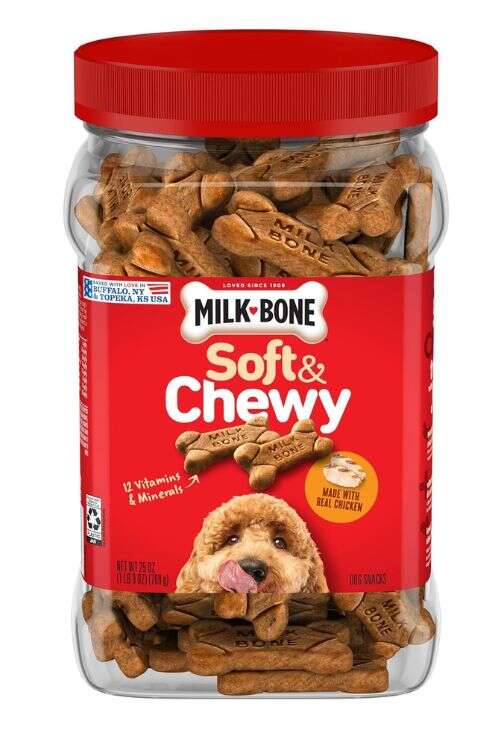
Understanding what goes into your dog’s treats is not just for the overly cautious pet parent — it is responsible ownership. The Milk-Bone Soft & Chewy Chicken Recipe ingredient list reads as follows:
Chicken, Soy Grits, Sugar, Corn Starch, Dicalcium Phosphate, Salt, Propylene Glycol, Guar Gum, Rice Flour, Natural Smoke Flavor, Brewers Rice, Lactic Acid, Calcium Carbonate, Potassium Sorbate, Minerals, Vitamins, BHA
Let us break each significant ingredient down:
Ingredient List Breakdown – Milk Bone Soft and Chewy Dog Treats
Chicken
Listed as the #1 ingredient by pre-processed weight. This means raw chicken — which contains significant water — is weighed before cooking. After moisture is removed during processing, chicken may drop considerably in the final dry matter composition. Still, real chicken as the lead ingredient is a genuine positive compared to meal-based or by-product-forward alternatives.
Soy Grits
A plant-based protein extender made from processed soybeans. Soy grits bulk up protein content inexpensively and improve texture. While not harmful to most dogs, soy is a common allergen. Dogs with soy sensitivity may experience digestive upset, skin irritation, or ear inflammation after repeated exposure.
Sugar
Listed third by weight, which raises legitimate eyebrows. Sugar is used to enhance palatability — essentially making treats more addictive to dogs. While a small amount is not acutely toxic, chronic sugar consumption contributes to weight gain, dental decay, and elevated blood glucose over time. Dogs do not need added sugar in their diet, full stop.
Corn Starch & Rice Flour
Binding agents that give the treat its shape and chewy consistency. These are carbohydrate fillers with minimal nutritional contribution beyond calories and texture. Neither is harmful, but neither adds meaningful nutritional value either.
Propylene Glycol
This is one of the more controversial ingredients in the formula. Propylene glycol is a humectant — it draws moisture into the treat to maintain that soft, chewy texture over the product’s shelf life. The FDA permits its use in dog food and treats.
However, it is banned for use in cat food due to toxicity in felines. While considered safe for dogs at the levels used in commercial treats, some pet owners prefer to avoid it entirely, and a growing number of premium treat brands have moved away from it in favor of glycerin or natural humectants.
Guar Gum
A natural thickener derived from guar beans. Generally well-tolerated, it functions as a binder and gives the treat a cohesive, pliable texture. Not a concern for most dogs.
Natural Smoke Flavor
Adds that characteristic savory aroma dogs find appealing. “Natural flavor” in pet food is a broadly defined term regulated by AAFCO. It means the flavor originates from a natural source but may still undergo significant processing. Not harmful, though some very sensitive dogs may react to flavor additives.
Garlic Powder (present in Minis variety)
This warrants a flag. Garlic in large quantities is toxic to dogs, as it belongs to the Allium family alongside onions and leeks. At the trace amounts used in the Minis, the FDA and most veterinary toxicologists consider it safe. However, owners of smaller dogs, dogs with blood disorders, or those who give treats very frequently should be aware of its presence.
Potassium Sorbate
A widely used, generally recognized as safe (GRAS) preservative. Much less controversial than BHA. It inhibits mold and yeast growth. No significant health concerns at treat-level doses.
BHA (Butylated Hydroxyanisole)
The most discussed ingredient in this entire formula. BHA is a synthetic antioxidant preservative used to prevent fats from going rancid. It extends shelf life and is inexpensive.
Feeding Guidelines: Milk Bone Soft & Chewy Dog Treats
This is an area many treat reviews gloss over entirely, which is a real disservice to dog owners. Milk-Bone’s own guidance advises:
- Full-sized Soft & Chewy: Feed as a snack, part of a healthy diet. Break into smaller pieces for small dogs. Not suitable for dogs under one year of age or adult dogs under 10 lbs (applies to most varieties except Beef & Filet Mignon, which can be given to puppies).
- Minis: Feed 3–4 treats per 5 lbs of bodyweight. This delivers approximately 10% of daily caloric needs, so reduce regular food by roughly 10% to compensate.
- General rule: Treats of any kind should not exceed 10% of your dog’s total daily caloric intake. Overfeeding treats — regardless of the brand — is one of the leading contributors to canine obesity.
These Treats Best For Which Dogs
- Senior dogs with dental issues: The soft, pliable texture is genuinely easier on aging teeth and gums. Multiple verified customer reviews on Chewy highlight this specifically — dogs with missing teeth or reduced jaw strength consuming these happily when hard biscuits become a problem.
- Small dogs needing portion control: The Minis variety at 4.45 calories per piece allows very frequent treating without tipping caloric balance. Ideal for training a Chihuahua, Shih Tzu, or Yorkshire Terrier.
- Training sessions: The treats break cleanly without crumbling, making them easy to portion on the fly. The 2-inch standard size can be snapped into thirds or quarters for rapid-reward training.
- Multi-dog households on a budget: At roughly $10–$13 for a 25 oz canister (approximately 80 treats), the per-treat cost is very competitive.
- Picky eaters: The natural smoke flavor and strong aroma make these particularly appealing to dogs who turn their nose up at bland treats. Numerous owners of notoriously finicky small breeds report success with this line.
Dogs Who Should Avoid or Limit These Treats
- Dogs under 1 year old: Most Soft & Chewy varieties explicitly state they are not suitable for puppies under one year. The Beef & Filet Mignon variety is the exception.
- Dogs under 10 lbs (adults): Same restriction applies across most of the lineup.
- Dogs with soy allergies: Soy grits are a primary ingredient — this is a hard no for soy-sensitive animals.
- Dogs with wheat or corn sensitivities: Corn starch is present, and while the formula is not wheat-forward like the classic Milk-Bone biscuit, always cross-check with your vet if sensitivities are known.
- Overweight or diabetic dogs: The sugar content (listed 3rd by weight) and 24-calorie-per-treat count add up quickly for dogs on calorie-restricted diets.
- Dogs whose owners prefer BHA-free products: Valid preference — look toward the Wholesome sub-line or alternatives like Zuke’s Mini Naturals, which use natural preservation.
Customer Feedback
Rather than cherry-pick a five-star quote and call it a day, here is an honest synthesis of what real owners consistently report across Chewy, Amazon, Reddit, and dog food advisory communities:
What Owners Love
- Palatability is nearly universal. Across hundreds of verified reviews, dogs ranging from picky Shih Tzus to aging Jack Russells show strong enthusiasm. The aroma, smoke flavor, and soft texture seem to hit the right notes for most dogs.
- Soft texture is a genuine differentiator for senior dogs, post-dental-surgery dogs, and those with fewer teeth. This comes up repeatedly in organic reviews — not just promotional copy.
- Breakability without crumbling is praised by trainers. Unlike many soft treats that either fall apart in your pocket or require scissors to portion, these snap cleanly.
- Made in the USA is a selling point for owners who experienced pet food scares from foreign-sourced products. Milk-Bone manufactures in the US, though a limited amount of minor nutritional supplement ingredients are sourced internationally.
- Supports service dog training programs — a detail that resonates with socially-conscious buyers who note Milk-Bone’s partnership with service animal organizations.
Recurring Criticisms
- Treats harden if not resealed properly. Several owners note the treats become firm and less appealing when left outside a ziplock or when the canister lid is not secured tightly between uses. This is a legitimate storage concern, not a product defect per se — but worth knowing.
- Sugar and propylene glycol concerns surface repeatedly in forum discussions among health-conscious owners, particularly on Dog Food Advisor threads and Reddit’s r/dogs.
- Smell is strong — polarizing. While most dogs react positively, some owners find the smoke-flavor aroma overpowering, especially in enclosed spaces.
- Not suitable for very small adult dogs catches some buyers off-guard. The 10-lb minimum for most varieties is not prominently labelled on the front of packaging.
Storage Best Practices
One of the most overlooked aspects of soft dog treats — and one that directly impacts both freshness and your dog’s willingness to eat them — is proper storage. Semi-moist treats like Milk-Bone Soft & Chewy are more vulnerable to environmental conditions than hard biscuits. Here is how to keep them at their best:
- Reseal tightly after every use. The canister lid is functional but not airtight by design. If you notice the treats hardening within days of opening, transfer them to a zip-lock freezer bag with excess air squeezed out.
- Store at room temperature, away from direct sunlight and heat. Warmth accelerates moisture loss and can cause the fats in the treat to oxidize faster, even with BHA present.
- Do not refrigerate unless the package instructs it. Refrigeration can actually draw moisture unevenly from semi-moist treats, making them rubbery or stale in texture.
- Check the best-by date before purchasing in bulk. The 25 oz canister offers great per-treat value, but if your dog only gets one or two treats daily, a smaller 5.6 oz bag may be the smarter buy to ensure freshness throughout.
- Outdoor use tip: If you carry treats in a training pouch or pocket, bring only what you need per session. Prolonged exposure to body heat and air degrades texture quickly — a complaint echoed by multiple owners who train outdoors.
Frequently Asked Questions (FAQs)
Are Milk-Bone Soft & Chewy treats safe for puppies?
Most varieties state they are not suitable for dogs under one year old. The Beef & Filet Mignon variety is an exception and can be fed to puppies. Always check the specific packaging.
Can I use these treats for training?
Yes. The standard treats can be broken into smaller pieces without crumbling. The Minis variety is purpose-built for frequent treating, at just 4.45 calories per piece.
Why do the treats harden after opening?
The soft texture depends on moisture retention. Once exposed to air, moisture evaporates from the semi-moist formula. Resealing the canister tightly or transferring treats to an airtight ziplock bag after opening significantly extends their shelf life and texture.
Are these treats grain-free?
No. The formula contains corn starch, rice flour, and brewers rice. Dogs with grain sensitivities should consider grain-free alternatives.
Does Milk-Bone test their treats for safety?
Milk-Bone (manufactured by J.M. Smucker Company) states that all ingredients meet or exceed FDA and AAFCO standards. The majority of ingredients are sourced from the US, with a limited number of minor ingredients such as nutritional supplements sourced internationally.
Conclusion
Milk-Bone Soft & Chewy Dog Treats are a reasonable everyday option for healthy adult dogs when used in moderation, but they are not without legitimate caveats.
Milk-Bone Soft & Chewy Dog Treats occupy a well-earned spot in the market — widely available, genuinely palatable to most dogs, and affordably priced for everyday use. The 12-vitamin fortification, real meat as the primary ingredient, and soft texture make them a practical choice, especially for senior dogs and training contexts.